There were so many women who were writing in England before 1700, yet it is not always easy to find and access their writing. Some of these might be available elsewhere, but each editor or editoral team makes different choices about what changes to make, and what to offer their readers. Some of these texts might not be elsewhere available on the internet without subscription to a specialized database.
This site serves as a digital library for making these texts pubicly available to read, teach, and learn from.
MA Student Editions
Undergraduate Collaborative Editions
About the Library
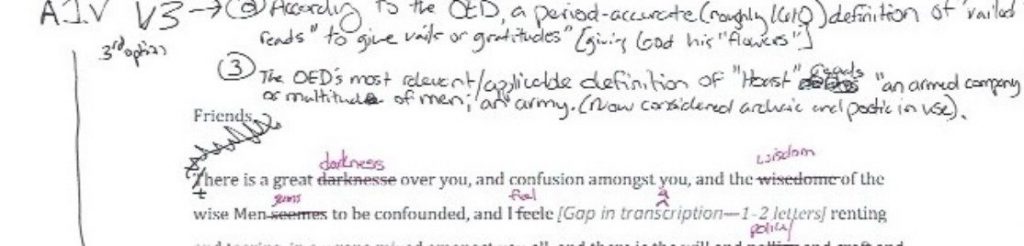
Two classes in Fall 2025 embarked on similar projects, to differnt intensities. One was a First-Year Seminar, a course that enables students to dig into a specialized topic their very first semester, even as they begin to acclimate to college life. This course, “Reading Renaissance Women” surveyed a range of early women writers, providing all aternative literary history to the voices that students were used to, especially fromt this time. The second course was a graduate level seminar called “Early Women Writers,” which included medeival authors, but was more focused on England (the FYS read a number of European writers).
In both classes, for their final projects, they created their own micro-editions of texts from this time period written by a women. Here, we used the wonderful Women Writers Online database, funded through a grant from Center for Teaching and Academic Leadership, which gave them access to a repository of texts unavailable elsewhere. When avaiable, students were provided with a scan of the original printing from Early English Books Online, so they could see how things originally looked on the page.
Students were responsible for selecting a text (by a writer not covered in class), and creating a 5-6 pages edited text. To do this, they needed to decide which section to excerpt, what changes they wanted to make, to formatting and language, and how they wanted to frame the piece in an introduction. The FYS students completed this as a group assignment and also included editorial notes about their practice. The MA students completed this individually, with larger reflective appratuses and a longer edition. In all cases, they were asked to add footnotes and glosses to make the text accessible for a modern reader. For both classes, this project enabled them to learn about early modern language, print history, and get to know their texts intimately. Students began to think about the choices that happen behind-the-scenes in many of the texts that they take to be neutral, authoratative, or official, such as the anthologies or coursebooks.